

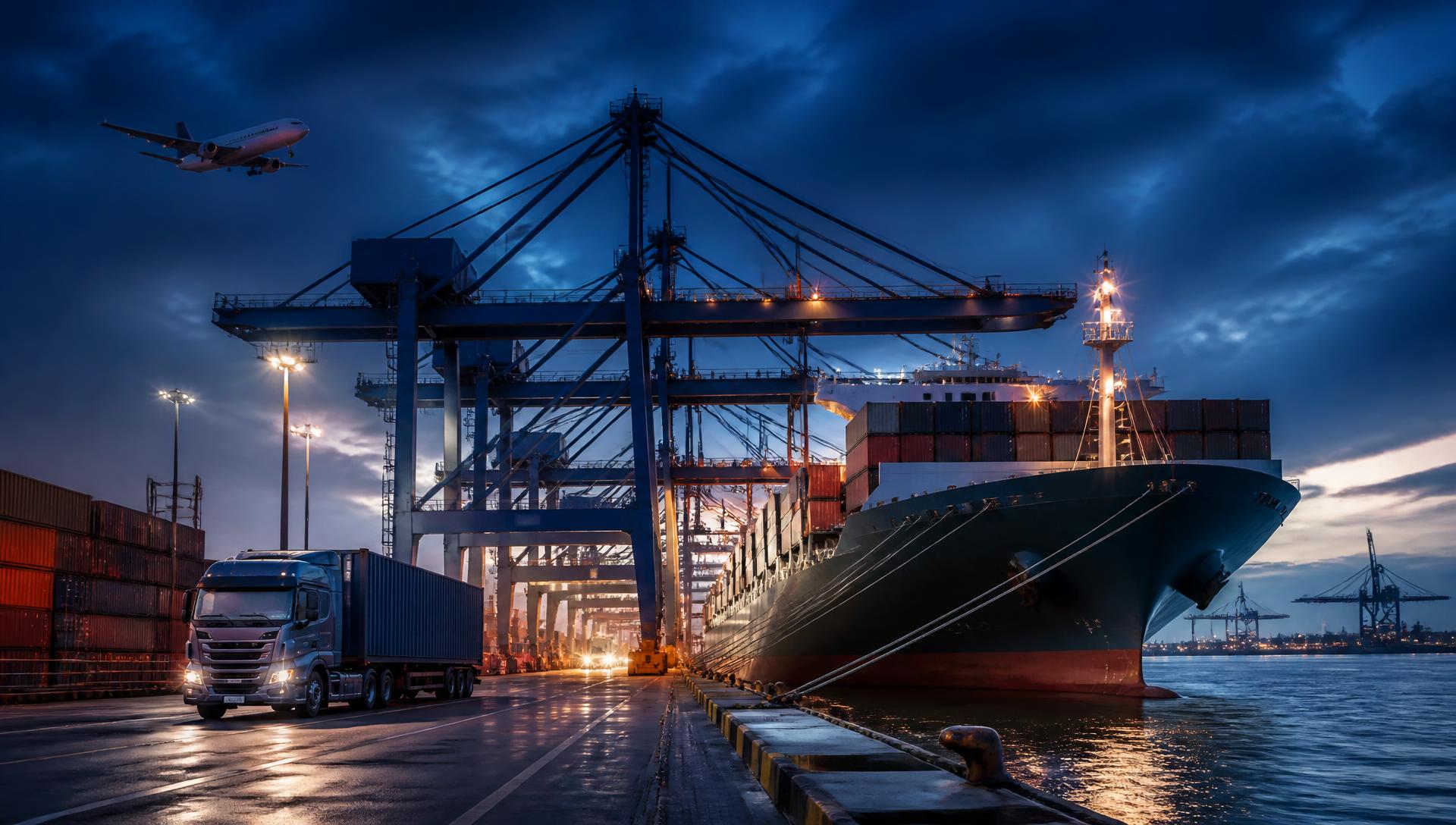
Freight Shipping Services Across the United States
Freight Shipping Now provides nationwide freight shipping services for commercial, industrial, and oversized cargo across all 50 states. Compare Full Truckload (FTL), Less-Than-Truckload (LTL), flatbed, step deck, refrigerated, heavy haul, expedited, intermodal, drayage, and specialized freight services through one coordinated transportation network of qualified transportation providers. Compare freight modes, review transit planning, and request a freight quote built on route-specific load planning.
- 50
- States covered
- 71
- U.S. port profiles
- 21
- Freight modes
- 904
- Planning pages
What Is Freight Shipping?
Freight shipping is the transportation of commercial goods, industrial equipment, raw materials, and oversized cargo between businesses, warehouses, ports, distribution centers, and job sites. Freight Shipping Now helps companies select the correct transportation method - including FTL, LTL, flatbed, step deck, refrigerated, heavy haul, intermodal, expedited, and drayage - by comparing shipment requirements, carrier capacity, transit times, routing, and pricing to coordinate nationwide commercial freight transportation.
Request a Freight QuoteFreight Snapshot
The coverage set we route against on every shipment record.
- Freight Modes
FTL • LTL • PTL • Flatbed • Reefer • Intermodal
- Shipment Types
- PalletizedIndustrialHeavy EquipmentMachineryConstructionRetailFoodMedical
- Facilities
- WarehousePortRailAirportFactoryDistribution CenterJobsite
- Infrastructure
- InterstatesPortsRail NetworksBorder CrossingsFreight Corridors
- Decision Factors
- WeightDimensionsCommodityFreight ClassHandlingTransit Time
How We Match Your Shipment
Each layer narrows carrier capacity, equipment and routing before a freight quote is issued.
Mode, equipment and carrier match confirmed against your shipment record.
Start with the mode that matches your load
Shipment size, handling tolerance and deadline decide the mode long before price does.
One shipper, one trailer, direct transit
Palletized freight, class-rated, terminal network
5-18 pallets, fewer touches than LTL
Time-critical, team or dedicated capacity
Enclosed, non-temperature-controlled freight
Temperature-controlled and protect-from-freeze
Open deck, side/top load, tarping and securement
Light freight, limited-access facilities
Your trailer, our tractor and driver
Terminal pull, chassis, container return
From vessel to final facility
Ocean transit, terminal release, drayage, transloading and inland trucking are separate responsibilities. Knowing where your obligation starts prevents demurrage and detention surprises.
- Step 1International origin port
- Step 2Ocean carrier
- Step 3U.S. port of entry
- Step 4Customs & terminal release
- Step 5Container drayage
- Step 6Transload / intermodal
- Step 7Truckload or LTL
- Step 8Warehouse, plant or final customer
Trailer selection drives loading, securement and cost
Enclosed trailer selection for palletized and packaged freight. The correct choice depends on the freight, loading method, route, and facility - not the…
Temperature-controlled equipment planning for chilled, frozen, and monitored loads. The correct choice depends on the freight, loading method, route, and…
Open-deck equipment for side, top, crane, and forklift loading. The correct choice depends on the freight, loading method, route, and facility - not the…
Lower-deck planning for taller legal-dimension and specialized freight. The correct choice depends on the freight, loading method, route, and facility - not…
Low-deck equipment considerations for heavy machinery and construction equipment. The correct choice depends on the freight, loading method, route, and…
Removable-gooseneck loading considerations for self-propelled and heavy equipment. The correct choice depends on the freight, loading method, route, and…
What actually moves your freight cost
We publish cost variables, not static rates. Rates change with lane balance, season, fuel and capacity.
| Variable | Why it matters | Where it shows up |
|---|---|---|
| Distance & lane balance | Backhaul availability changes capacity pricing on the same miles. | FTL, PTL, drayage |
| Weight & density | Density determines LTL freight class and reclassification risk. | LTL, PTL |
| Equipment type | Open deck, reefer and specialized trailers carry different capacity pools. | All modes |
| Facility conditions | No dock, tight sites and appointment windows add time and equipment needs. | Delivery accessorials |
| Accessorials | Liftgate, inside delivery, tarping and detention are billed separately. | Every mode |
| Urgency | Expedited and team service price capacity, not miles. | Expedited, time-critical |
| Port variables | Free time, chassis supply and terminal appointments drive demurrage exposure. | Drayage, import/export |
Freight built around how your sector ships
Freight shipping for manufacturing should connect the load, facilities, operating schedule, equipment, and delivery requirements in one documented plan.
Freight shipping for construction should connect the load, facilities, operating schedule, equipment, and delivery requirements in one documented plan.
Freight shipping for automotive should connect the load, facilities, operating schedule, equipment, and delivery requirements in one documented plan.
Freight shipping for retail should connect the load, facilities, operating schedule, equipment, and delivery requirements in one documented plan.
Freight shipping for e-commerce should connect the load, facilities, operating schedule, equipment, and delivery requirements in one documented plan.
Freight shipping for food and beverage should connect the load, facilities, operating schedule, equipment, and delivery requirements in one documented plan.
Major U.S. port terminal and drayage coordination
Freight connected to Port of Los Angeles can require terminal release, drayage, transloading or intermodal transfer, and regional or long-haul trucking.…
Freight connected to Port of Long Beach can require terminal release, drayage, transloading or intermodal transfer, and regional or long-haul trucking.…
Freight connected to Port of Oakland can require terminal release, drayage, transloading or intermodal transfer, and regional or long-haul trucking. The…
Freight connected to Port of Seattle can require terminal release, drayage, transloading or intermodal transfer, and regional or long-haul trucking. The…
Freight connected to Port of Tacoma can require terminal release, drayage, transloading or intermodal transfer, and regional or long-haul trucking. The…
Freight connected to Northwest Seaport Alliance can require terminal release, drayage, transloading or intermodal transfer, and regional or long-haul…
A diagnostic quote request, not a form dump
Tell us the lane, the load, the facility and the deadline. A coordinator confirms equipment, accessorials and timing before pricing.
Source-reviewed freight operations guidance
What Freight Service Does My Shipment Need? helps a commercial shipper prepare the load, facility, equipment, route, and documentation details that should…
Full Truckload vs. LTL helps a commercial shipper prepare the load, facility, equipment, route, and documentation details that should be reviewed before…
Partial Truckload vs. LTL helps a commercial shipper prepare the load, facility, equipment, route, and documentation details that should be reviewed…
How to Ship Palletized Freight helps a commercial shipper prepare the load, facility, equipment, route, and documentation details that should be reviewed…
Freight Class Planning Guide helps a commercial shipper prepare the load, facility, equipment, route, and documentation details that should be reviewed…
How to Calculate Pallet Density helps a commercial shipper prepare the load, facility, equipment, route, and documentation details that should be reviewed…
How our information is maintained
How this page is maintained
- Sources reviewed
- Carrier tariffs, NMFTA classification concepts, port authority publications, FMCSA guidance
- Last reviewed
- 2026-07-25
- Data year
- 2026
- Reviewed by
- FreightShippingNow freight operations editorial team
- Claim limitations
- No rates, rankings, transit times or capacity availability are guaranteed on this page.
- Provider role
- Freight coordination and brokerage-style arrangement of transportation; carrier services are performed by licensed motor carriers.
- Change notice
- Operational information, terminal procedures and accessorial rules are subject to change.
Common freight shipping questions
How do I know whether to ship FTL, LTL or partial truckload?
Shipment size and handling tolerance decide. Under about 6 pallets usually fits LTL, 6-18 pallets often prices better as partial truckload with fewer touches, and full trailer volume, high value or fragile freight generally belongs on a dedicated FTL trailer.
What is freight class and why did my invoice change?
LTL freight class is driven mainly by density, plus stowability, handling and liability. If the pallet dimensions or weight on the bill of lading do not match the shipment, the carrier can reweigh, remeasure and reclassify it, which changes the price after pickup.
Can you deliver where there is no loading dock?
Yes, with the right accessorials. A liftgate, a smaller straight truck or driver-assist service is usually required. Flagging limited access at quote time prevents a failed delivery attempt and a redelivery charge.
Who is responsible for demurrage and detention at the port?
Demurrage accrues when the container stays in the terminal past free time, and detention accrues when the container stays out past the allowed days. Both depend on terminal release timing, chassis availability and appointment supply, so we plan drayage against your last free day.
Do you publish rates?
No. We publish cost variables and planning guidance. Freight pricing depends on the lane, equipment, season, capacity and accessorials for your specific shipment, so a coordinator confirms pricing per load.
Ready to move the load?
Send the lane, weight, dimensions, commodity, facility conditions and deadline. We will confirm mode and equipment before pricing.